
AC Drain Line Clogs and Water Leaks in Humid Houston
An AC drain line clog is the most likely reason you're finding water around your indoor unit, or a wet spot on a ceiling below it. Your air conditioner pulls water out of the air as it cools, and that water leaves through a small pipe. In humid Houston, algae and sludge can block that pipe, and the water backs up and overflows. Turn the system off at the thermostat as soon as you see a leak, because that stops new water from being made, and then clear the line or call a technician.
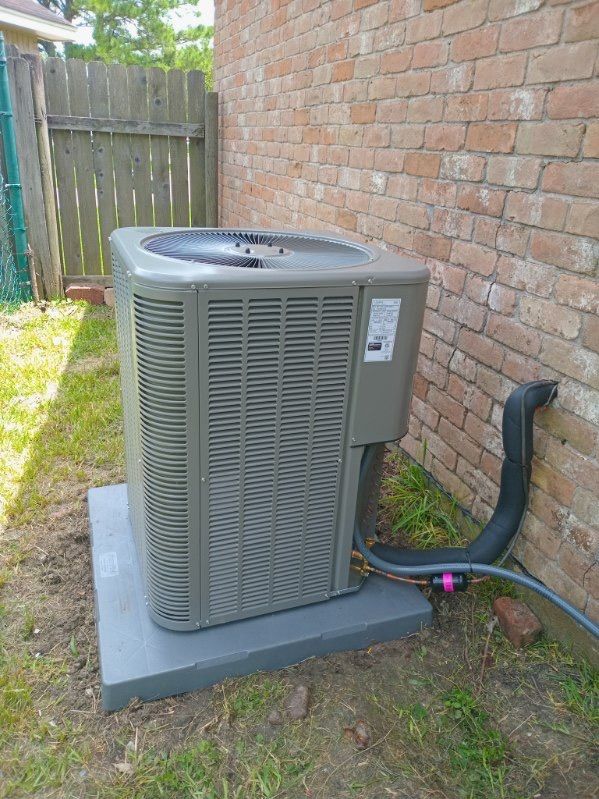
A clog is often a simple repair if you catch it early, but water in an attic can do a lot of damage before anyone notices it.
Why Your AC Makes So Much Water
As warm, humid air crosses the cold indoor coil, moisture condenses on the coil the same way it does on a glass of iced tea. It drips into a drain pan and runs out through a condensate line, usually a PVC pipe that ends outside near the foundation or ties into a household drain.
On a muggy Houston day a typical home system can move several gallons of water through that line, sometimes much more. That's why the drain gets so much use here. The line is warm, dark and always wet, which is ideal for the slimy growth that clogs it. Dust that gets past a poor filter adds to the mix.
Signs of a Clogged Drain Line
Some of these are easy to spot. Others you only find if you go looking:
- Water around the indoor unit or furnace closet
- A brown stain or wet patch on a ceiling, especially under an attic unit
- Water in the secondary pan under an attic system
- Water dripping from a pipe over a window or under the eaves
- A musty smell near the unit or at the vents
- The AC shutting off by itself with the thermostat still calling for cooling
That last one catches people off guard. Many systems have a float switch that cuts power when water rises too high. It's doing its job, but it looks like a dead AC.
What to Do When You See Water
Do these in order:
- Turn the system off at the thermostat. If water is near any electrical parts, or it's coming through a ceiling, also switch off the AC and air handler breakers at the panel if you can reach them safely.
- Protect the area. Move belongings, put down towels, and put a bucket under active drips. A sagging, wet ceiling can come down, so keep people out from under it.
- Check the filter. A very dirty filter can freeze the coil, and melting ice can look exactly like a drain problem. If you see ice on the coil or lines, leave the cooling off until it has melted.
- Look at the pan. If a secondary pan in the attic is holding water, the primary drain has likely failed.
Don't simply empty the pan and restart the system. The clog is still there, so it will fill up again.
Can You Clear the Line Yourself?
Sometimes, yes. This is one of the few AC jobs that a careful homeowner can try, and it doesn't involve refrigerant or wiring.
With the system off, find where the drain line ends outside. A wet/dry shop vacuum held tight over that opening for a minute or two will often pull out the clog. You may see a slug of sludge land in the canister. Some systems also have a capped T-shaped access point on the line near the indoor unit. After clearing it, many technicians suggest pouring a cup of distilled white vinegar into that access point. Check your equipment manual first, and avoid mixing cleaners. Never mix bleach with anything else.
Skip the DIY approach and call a technician if the line clears but backs up again, if the system won't restart, if you can't get to the line, or if your unit is in an attic you aren't comfortable working in. Attics are dangerous in Houston heat, and one step off a joist can put a foot through the ceiling.
Other Reasons an AC Leaks
A clog is common, but it's not the only cause. A frozen coil that melts can overflow the pan. A rusted-through drain pan on an older system can leak even when the line is clear. Poorly sloped or sagging drain pipe can hold water. A failed condensate pump, used where a drain can't run downhill by gravity, can overflow without warning. A loose fitting on the drain can also cause a slow drip at the unit.
If your unit sits in an attic, check the safety setup too. A properly installed attic system generally has a secondary pan or a float switch, often both, to stop an overflow before it reaches your ceiling. If yours has neither, ask about it.
How to Help Prevent the Next Clog
A few simple habits go a long way:
- Change your filter on schedule so less dust ends up in the pan.
- Have the drain cleared and tested during regular maintenance, ideally before the heavy cooling months.
- Look at the secondary pan a few times during summer if you can get to it safely.
- Make sure the outdoor drain end isn't buried in mulch, soil or plants.
- Pay attention to musty smells, which can be an early warning.
If your house also feels sticky with the AC running, the moisture load itself may be worth a look. A whole-home dehumidifier can help in some Houston homes, and it has its own drain that needs the same attention.
When to Call
If water keeps coming back, or you found it in a ceiling, have someone look before you run the system again. Safe Air provides AC repair for Houston homeowners, with 24/7 emergency response for problems like an active leak. There's a service fee for repair visits, and the technician will explain the options and the price before starting work. Call (281) 305-9493 or reach us online.
Related services
Keep reading
Need HVAC Service?
Safe Air LLC — licensed HVAC repair, installation, and maintenance for homeowners in Houston, Austin, and San Antonio.
No Obligation