Why Is My AC Running but Not Cooling? A Houston Homeowner's Guide
When your AC is running but not cooling, the cause is usually one of a short list: a clogged filter, a frozen coil, a refrigerant leak, a dirty outdoor coil, or a failed part in the outdoor unit such as a capacitor. Check the thermostat, the filter and the breaker first. If you see ice anywhere on the system, or those checks don't solve it, turn the system off and call a technician. Running it in that condition can damage the compressor, which is one of the most expensive parts of the system.
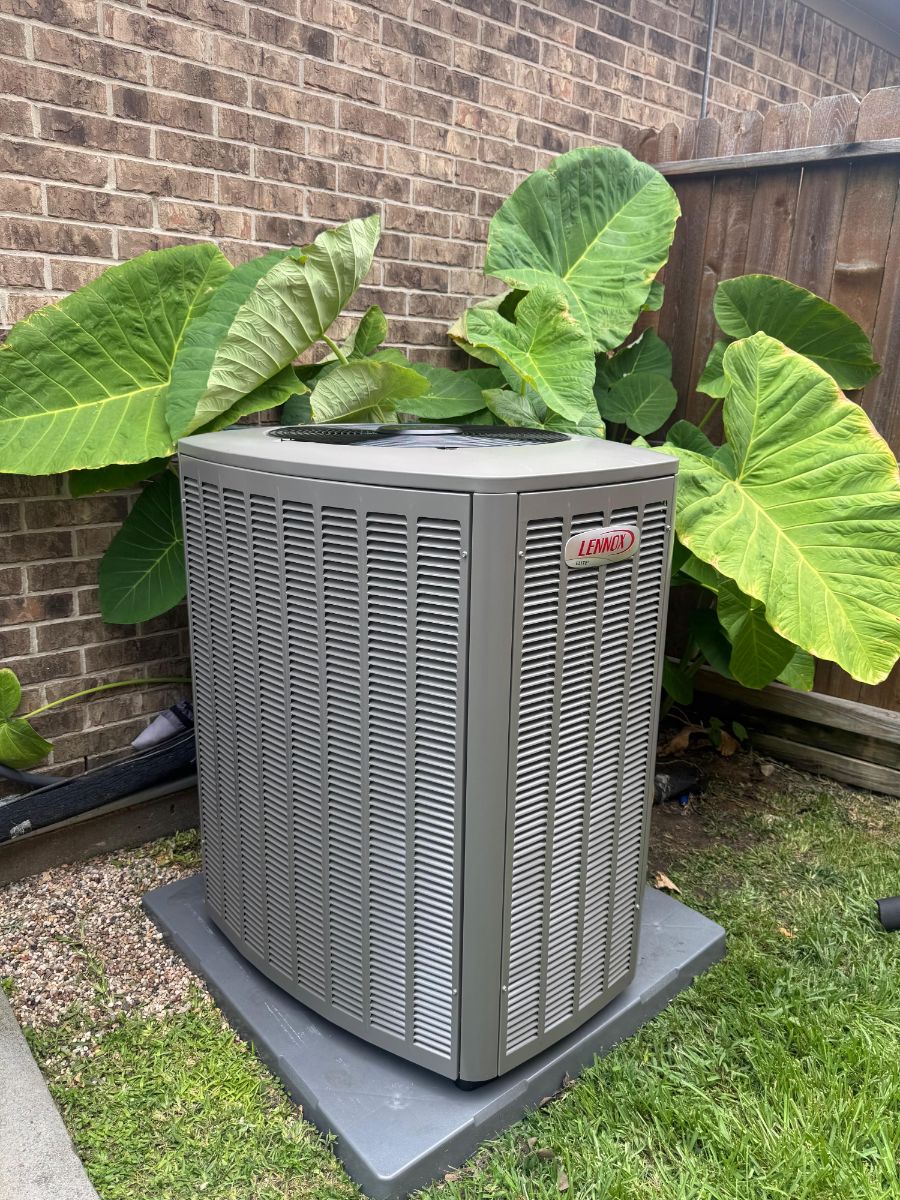
Houston makes this problem more common than it is in milder places. A system here runs for much of the year, often for long stretches, and it has to remove a lot of moisture along with the heat. Small problems that might go unnoticed elsewhere show up quickly here.
First, Make Sure It's Actually Not Cooling
Before assuming something is broken, confirm what the system is doing. Set the thermostat to Cool, set it a few degrees below room temperature, and put the fan on Auto. A thermostat left on Fan or On will move air all day without cooling it, and it's a common cause of "warm air" complaints.
Then give the system 15 minutes and feel the air at a vent near the indoor unit. It should feel clearly cooler than the room. If you have a simple thermometer, compare the air going into a return grille with the air coming out of a nearby supply vent. Many systems show a drop of somewhere around 15 to 20 degrees, though that number varies with humidity and conditions, and it tends to read lower on muggy Houston days.
Also keep expectations realistic during a heat wave. On a 100-degree afternoon, a healthy system may run nonstop and still sit a few degrees above the setting. That can be normal. A house that keeps getting warmer is not.
Checks That Are Safe for a Homeowner
These take a few minutes and don't require tools or opening any equipment:
- Air filter. Pull it out and hold it up to the light. If you can't see through it, replace it. A clogged filter is one of the most common reasons for weak cooling and frozen coils.
- Breakers. Look at the panel for a tripped AC or air handler breaker. If you reset it once and it trips again, leave it off. A breaker that keeps tripping is telling you there's an electrical fault.
- Outdoor unit. Go outside and see if the fan on top is spinning. Clear away leaves, grass clippings and anything stacked against the unit.
- Vents. Make sure furniture or rugs aren't blocking supply vents or return grilles.
That's where the homeowner's part ends. Don't open electrical panels on the unit, and don't try to add refrigerant. Refrigerant work requires EPA certification, and the electrical parts in an AC can hold a dangerous charge even after the power is off.
Frozen Coil: Turn It Off
Ice on the copper refrigerant lines or on the indoor coil means the coil dropped below freezing. Usually that comes from poor airflow, like a dirty filter or a blocked coil, or from low refrigerant. Ice then blocks even more airflow, so the problem feeds itself.
If you see ice, turn the system off at the thermostat right away. You can set the fan to On to help it thaw, and allow several hours, sometimes most of a day, for all of it to melt. Watch for water as it does, because melting ice can overflow the drain pan. Don't chip at the ice, since the coil is easy to damage. Change the filter before you restart. If it freezes again, stop running it and have it diagnosed, because the cause is still there.
Low Refrigerant Means There's a Leak
An AC doesn't use up refrigerant the way a car uses gas. It circulates in a sealed loop, so if the charge is low, it escaped somewhere. Signs include weak cooling, long run times, a hissing sound near the lines, and ice on the lines.
Adding refrigerant without finding the leak is a short-term patch. The right approach is to find the leak, then decide with the technician whether repairing it makes sense for a system of that age. Leaks in older indoor coils can sometimes point toward replacing the coil or the system rather than repeating a recharge every summer.
Outdoor Unit Problems
The outdoor unit gets rid of the heat your system pulled out of the house. If it can't, the air inside won't cool. A few things can go wrong out there:
- Dirty condenser coil. Grass, dust and cottonwood fluff can coat the outside fins and trap heat.
- Failed capacitor. This small part helps start the fan and compressor. Long Houston run times wear them out, and a bad one can leave the indoor fan blowing while the outdoor unit does nothing. A humming unit with a fan that won't spin is a typical sign.
- Bad contactor or fan motor. These can fail from wear, or from insects and debris in the unit.
- Failing compressor. This is the most serious possibility and needs a proper diagnosis before anyone recommends replacing anything.
All of these involve live electrical work, so they're for a licensed technician to handle.
When the Problem Is the Ducts
Sometimes the equipment is making cold air and it just isn't reaching you. Many Houston homes have ducts in a hot attic. A disconnected or torn duct can dump cold air into the attic, and it can pull hot air in on the return side. Signs include one or two rooms that stopped cooling, or a system that runs constantly with weak airflow at certain vents. If that sounds familiar, our page on duct design and replacement explains what's involved.
Repair or Replace?
One repair on a younger system usually makes sense. If your system is past 10 to 15 years old, breaks down repeatedly, or needs a major part like a compressor, it's worth comparing that repair against AC installation and replacement. A good technician should explain both options and let you decide.
Get It Checked
If the simple checks didn't fix it, turn the system off and get it diagnosed. Safe Air handles AC repair for Houston homeowners, with 24/7 emergency response for urgent no-cool situations. There's a service fee for repair visits, and the technician goes over the options and the price before starting any work. Call (281) 305-9493 or request service online.
Related services
Keep reading
Need HVAC Service?
Safe Air LLC — licensed HVAC repair, installation, and maintenance for homeowners in Houston, Austin, and San Antonio.
No Obligation