How to Choose the Right AC Filter in Austin, Including Cedar and Pollen Season
The right AC filter in Austin for most homes is a pleated filter rated around MERV 8 to MERV 11, changed often during cedar and pollen season. That range catches most pollen and dust without choking airflow. A MERV 13 can do more for allergy-prone households, but only if your system can handle it, which often means a deeper filter cabinet. The tightest filter on the shelf isn't automatically the best one for your home, and on some systems it can cause trouble.
Austin gives filters a tough job. Mountain cedar, the Ashe juniper behind what locals call cedar fever, typically releases pollen from about December into February. Oak follows in spring, grasses come through in late spring and summer, and ragweed shows up in fall. There isn't much of a break.
What MERV Ratings Mean
MERV stands for Minimum Efficiency Reporting Value. It's a standard scale for how well a filter captures particles of different sizes. Higher numbers catch more, and smaller, particles. For a home, here's a rough guide:
- MERV 1 to 4: Thin fiberglass filters. These protect the equipment a little but do very little for your air.
- MERV 6 to 8: Basic pleated filters. These catch a good share of dust, pollen and lint.
- MERV 9 to 12: Better pleated filters. These add more fine dust and some mold spores and pet dander.
- MERV 13: High-efficiency filters that also catch a larger share of very fine particles, such as smoke.
Store brands sometimes use their own rating systems, such as MPR or FPR. Look for the MERV equivalent on the package so you can compare them fairly.
Cedar Pollen and Filters
Whole pollen grains are large by filter standards. Cedar pollen is big enough that a decent pleated filter catches most of what actually reaches it. What many people don't realize is the filter only cleans air that passes through it. During cedar season, pollen also rides in on your clothes and pets, and through open doors, and it settles on surfaces before the system ever sees it. Pollen grains can also break down into finer particles, and that's one reason a higher-rated filter may help some households.
A few habits during high pollen days help as much as a filter upgrade:
- Keep windows closed when counts are high. Local reports will tell you when cedar is peaking.
- Change clothes and shower after long periods outside.
- Wipe down dogs and cats after they've been out.
- Set the system fan to run for periods during the day, if your thermostat allows it, so more air passes through the filter. In a dry winter this is fine. Keep it on Auto in humid weather.
- Vacuum with a HEPA vacuum if you have one.
A filter isn't a medical treatment. If cedar season hits you hard, it's worth talking to a doctor or allergist as well.
Why a Tighter Filter Can Backfire
A filter that catches more also usually restricts more air. Every system has limits on how much resistance it can handle. If a filter is too restrictive for your equipment, a few things can happen. Airflow drops, the system runs longer, and the coil can get cold enough to freeze. Some systems will simply fail to cool as well as they should.
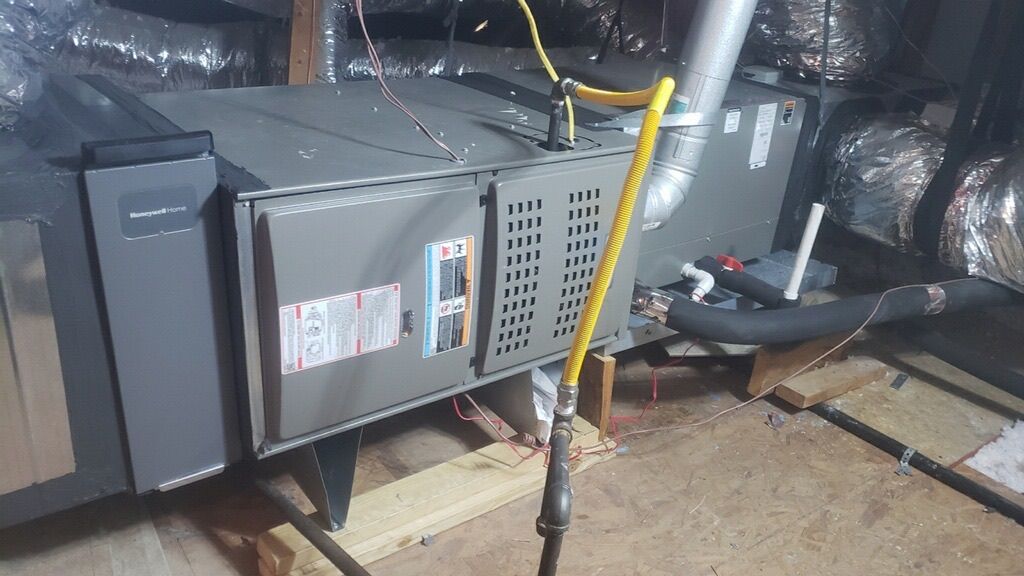
The size of the filter matters a lot. A thin 1-inch MERV 13 has little surface area, so it may restrict much more than a 4- or 5-inch media filter with the same rating. The deeper filter has far more pleats, which lets air through more easily and makes it last longer. If your system takes only a 1-inch filter and you want better filtration, a technician can tell you whether a larger filter cabinet is an option.
Check your equipment manual, and pay attention after a change. Weaker airflow, a louder system or ice on the lines all mean you should go back to a less restrictive filter and get it checked.
How Often to Change It
It depends on the filter and the house. Typical guidance for 1-inch filters is every one to three months. Deeper media filters usually last several months or longer, so follow the manufacturer. In Austin, a house with pets or a long stretch of cedar or dust may need more frequent changes.
An easy method is to check it monthly. Hold it up to a light. If you can't see light through it, change it. Then write the date on the edge of the new one. While you're there, check the printed size, since filter sizes are often rounded and not exact, and make sure the arrow points toward the blower.
Filters Can't Fix Leaky Ducts
If a return duct has a gap in the attic, the system can pull in dusty attic air that never crosses the filter. That's a common reason for a house that stays dusty no matter which filter you buy. Dust streaks around vents or grilles can be a sign of this. If you suspect it, a look at your ductwork may help more than another filter upgrade.
When a Filter Isn't Enough
Sometimes a homeowner has done the filter upgrades and still wants more. That's when a whole-home air purifier is worth considering. It works with your existing HVAC system, so it treats the air moving through the whole house instead of a single room. A portable unit with a true HEPA filter can still be useful in a bedroom. One caution is to avoid devices that deliberately produce ozone, which the EPA warns can irritate the lungs.
Air cleaning works best as part of a wider plan, along with good filters, clean equipment and tight ducts. Our indoor air quality page covers the other options.
Ask a Technician
If you aren't sure what your system can handle, Safe Air can look at your setup and suggest a filter and airflow plan that fits. Call (281) 305-9493 or request service online.
Related services
Keep reading
Need HVAC Service?
Safe Air LLC — licensed HVAC repair, installation, and maintenance for homeowners in Houston, Austin, and San Antonio.
No Obligation