Attic Insulation and Energy Bills in Texas Heat
Attic insulation can lower energy bills in Texas heat because it slows the heat moving from a very hot attic into your living space, so your AC runs less. How much you'll save depends on what's up there now. A home with thin or patchy insulation usually gains the most, while a well-insulated attic gains little from adding more. For Houston, Austin and San Antonio, ENERGY STAR's guidance points to about R-38 to R-49 for attics, and a simple look at your own attic will tell you if you're short of that.
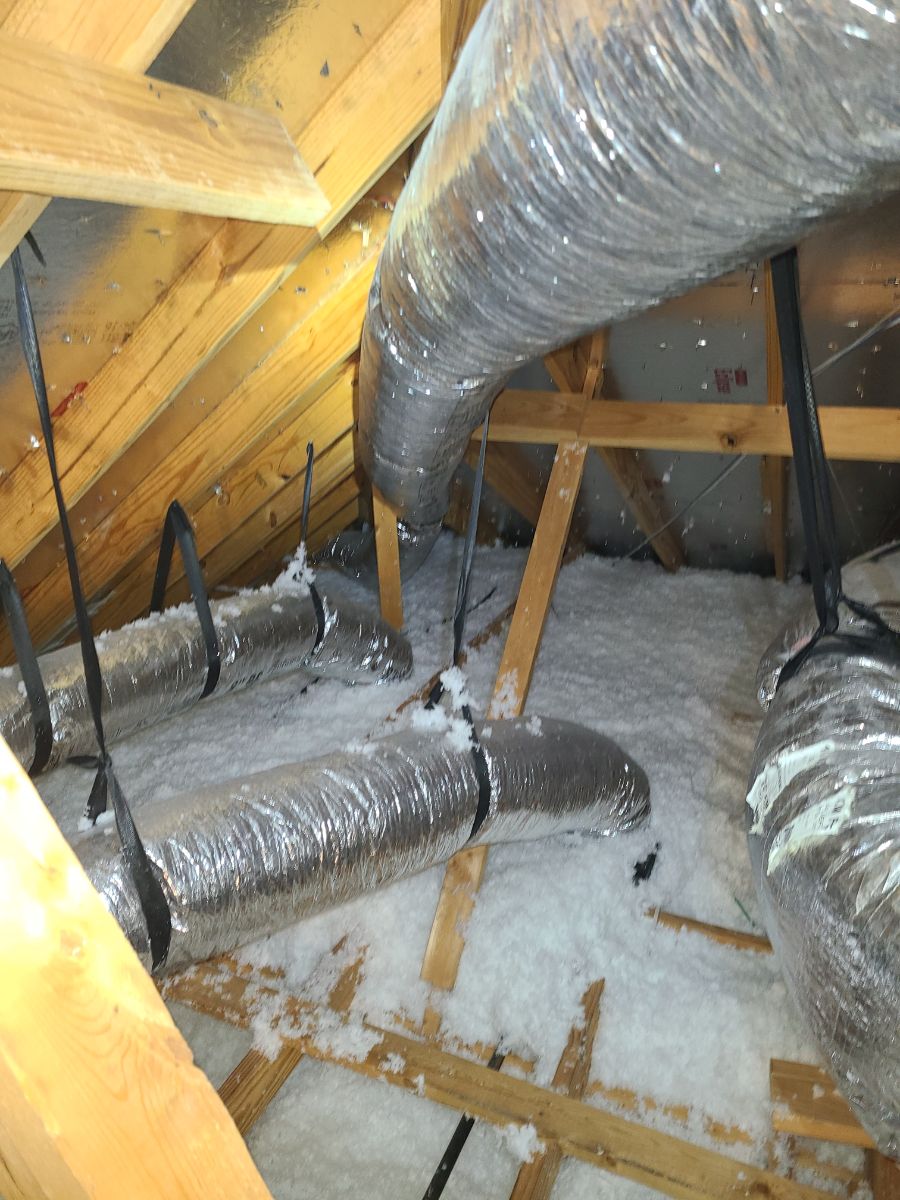
Your attic is the hottest place in your house. On a summer afternoon it can get far hotter than the air outside, while the room below it sits in the 70s. That difference pushes heat straight down through the ceiling all day and well into the evening.
How Heat Gets Into the House
Roof shingles soak up sun and radiate heat into the attic. From there it passes through the ceiling, and insulation is what slows it down. Insulation doesn't stop heat. It reduces how fast heat moves. That's what an R-value measures, and a higher R-value means more resistance.
Two other things happen up there at the same time:
- Air leaks. Gaps around light fixtures, attic hatches, plumbing and wiring let conditioned air escape and pull hot air in. Insulation alone doesn't stop moving air.
- Duct heat gain. In most Texas homes, ducts run through that same hot attic. Cool air gets warmer on its way to your rooms if those ducts leak or are poorly insulated.
That's why attic work often pays off most when it's looked at together with the ductwork, and not as a separate project.
How Much Do You Really Have?
You can get a rough idea without any special tools. Go up on a cool morning, not an August afternoon. Stay on the joists or a walkway, since a step on the drywall can go through the ceiling. Wear a mask and gloves. Never touch or disturb anything you can't identify.
Look across the attic floor and measure the depth in a few spots:
- If the tops of the ceiling joists are clearly visible, you likely need more.
- If the insulation is level with or just over the joists, it may be less than the recommended level.
- If you see bare spots, dark or matted patches, or areas that were pushed aside for other work, those gaps matter.
Most blown insulation runs very roughly R-2.2 to R-3.8 per inch, depending on the material. So a level of R-38 would be somewhere around 10 to 17 inches deep. Dark stains on insulation can mean air leaks, because air passing through leaves dust behind.
How Much Does Texas Need?
ENERGY STAR's recommended levels are based on climate zone. Houston, Austin and San Antonio fall in zone 2, and Dallas falls in zone 3. For both zones, its guidance is R-49 for an uninsulated attic and R-38 for an attic that already has 3 to 4 inches of insulation.
More isn't always better. The first layers do the most. Going from almost nothing to a decent level makes a big difference, but going from a good level to a very high one adds less. A contractor should be able to explain where your attic falls on that curve.
What About the Savings?
Savings vary from house to house. ENERGY STAR estimates that homeowners can save an average of about 15 percent on heating and cooling costs by air sealing and adding insulation in attics, floors over crawl spaces and accessible basement rim joists. Your result will depend on your starting point, your system's efficiency, your electric rate and the way you use the house. Be wary of anyone promising a specific number before they've looked at your attic.
Lower bills aren't the only gain. Many homeowners notice that upstairs rooms feel more even and that the system doesn't run as hard through the hottest part of the day. Less run time also means less wear in a climate that already asks a lot of an AC. Better insulation can help in a winter freeze as well, when your heating system is working hard.
What to Fix Before Adding More
Doing things in the right order matters. Before new insulation goes in, a good contractor will look at these:
- Air sealing. It's far easier to seal gaps before they're buried.
- Roof leaks. Wet insulation doesn't work well and can cause other problems.
- Ventilation. Soffit vents must stay clear, and baffles can keep insulation from blocking them.
- Recessed lights. Older fixtures that aren't rated for contact with insulation need the right clearance.
- Old wiring. Knob-and-tube wiring should be evaluated by an electrician before insulation goes over it.
- Suspect materials. Older loose vermiculite may contain asbestos. Leave it alone and have it tested.
Blown Insulation or Batts?
For most existing attics, blown insulation is the practical choice. It fills in around joists, wires and pipes, and it can go right over existing insulation in many cases. It also works well as a top-off, as long as the existing insulation is dry and in decent shape. Batts can work in open areas, but gaps and compression around obstacles cut into their performance.
Should You Replace the AC First?
If your system is still working well, adding insulation first can make sense. A tighter, better-insulated house has a smaller cooling load, and that could affect the size of your next system. If you're already planning a new system, it's worth doing both in the right order, so the load calculation reflects the improved attic. Our AC installation and replacement page explains how sizing works.
Have Your Attic Looked At
If you aren't sure what's up there or how much you have, Safe Air can look at it and give you a straight assessment. We install attic and blown insulation for Texas homeowners, and we'll explain what would actually help your home. Call (281) 305-9493 or contact us online.
Related services
Keep reading
Need HVAC Service?
Safe Air LLC — licensed HVAC repair, installation, and maintenance for homeowners in Houston, Austin, and San Antonio.
No Obligation